 |
| Sailing under main alone |
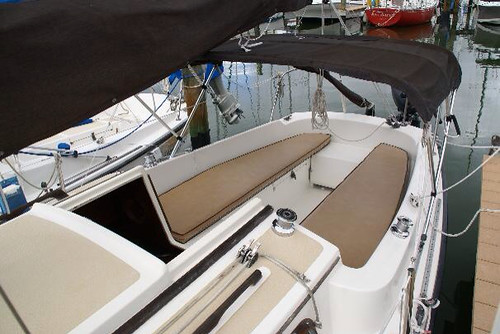
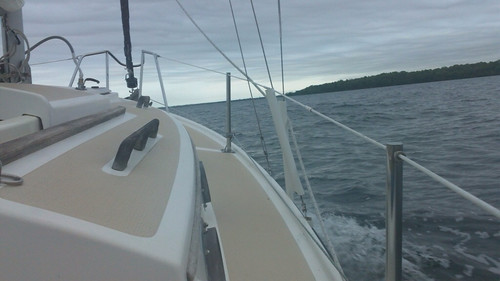
The weather wasn't the best, but it was better than trying to sail when the water still has ice on top. We were more than anxious to get back on the boat, so despite the cloudy skies and cool temps, we set off from Marshall Park to run Wrinkles through her paces. The rigging went faster this time, which is always a good thing. We knew where everything went - well almost everything. It seems that we have misplaced the boom vang. Anyone seen where it is? Soon we were on the water facing 15 mph winds and two foot waves. We decided to reef the mainsail until we were sure how Wrinkles would perform in the wind. Probably wasn't necessary, but better safe than sorry.
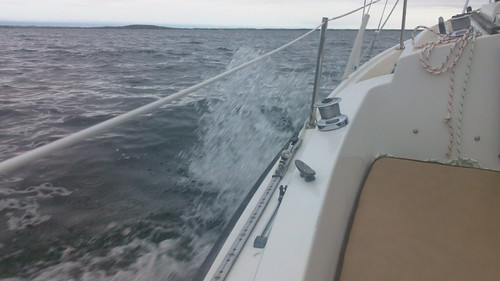 |
| Fun!!! |
We played around in the waves for a while and then headed over to our favorite anchoring spot at Picnic Point and a light supper. The Super Moon was just rising over the treetops. We had read on our Com-Pac forum that the Super Moon is when the moon passes closest to the earth giving us the biggest, brightest moon of the year. It was truly a beautiful sight. The pictures we took did not do it justice. So there we bobbed with a beautiful moon, the wonderful smell of a campfire from shore and a bottle of wine. It just doesn't get any better than this.
 |
| Prepping supper |
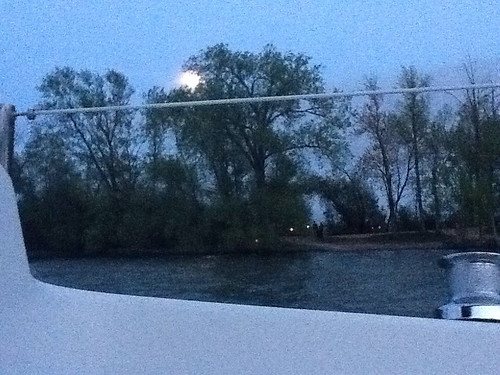 |
| Super moon rising |
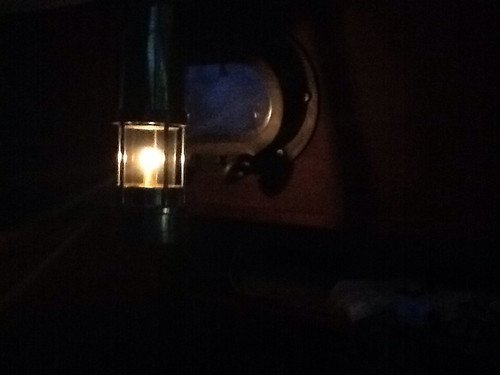 |
| Weems and Plath oil lamp making the cabin cozy and dry |
Some would think that anchoring out for the first time on a new boat would be difficult. New sounds, new motions, different ground tackle all conspire to make sleeping difficult. We must be very comfortable with our new boat because we slept like rocks. In fact, we slept in later than we have in ages. When we finally got moving, we had our usual breakfast of oatmeal, coffee and tea. The morning was another ugly gray one, but the winds were good, so it was a sailing day. We were able to zip along on a beam reach and covered more ground than we ever remember doing on the 19.
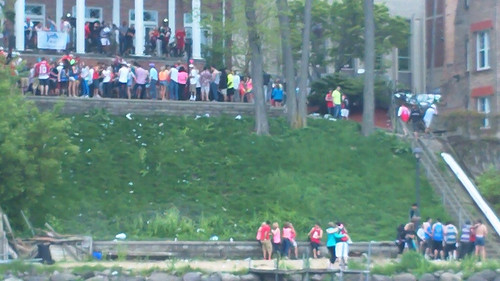 |
| Party in Madison!! |
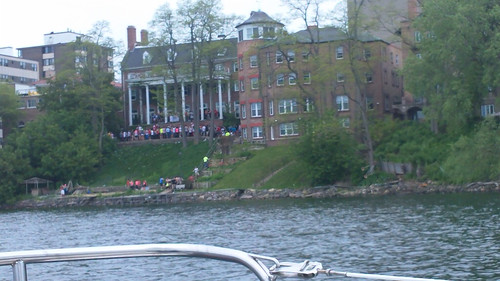
We sailed in next to the shore to get a closer look at the lake-side frat parties. Last weekend before finals and the stereos were pounding out some good tunes while frisbees and footballs were tossed around. We dropped the anchor over by the Memorial Union for lunch. From there we got to watch the big crane lifting deep-keel boats up and over a tree and into the water. After splashing, they putted out to their mooring balls. Sailing season begins! We heated up a can of soup and paired that with a gourmet PB &J sandwich. It is funny how a simple, inelegant lunch can be something special. The police raided the parties, shut down the music and kicked everyone out. Since we lost our entertainment, we hoisted sails and sailed off the anchor.
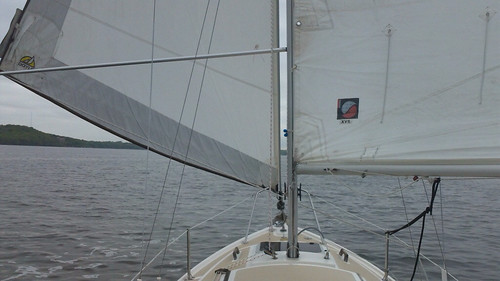 |
| Sailing wing and wing |
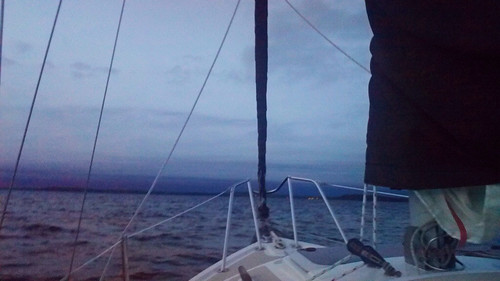
We decided that the weather looked worse for tomorrow, so we headed for home. For once the wind was pushing us directly where we wanted to go, so we set the sails for wing and wing and glided across the lake the five miles back to the ramp. For those non-sailing readers, wing and wing means that the sails are pushed out to opposite sides of the boat and you run with the wind directly behind you. Kind of fun!
 |
| Time to head home |
Back to the ramp and pull-out. We had another picture perfect docking with no one to see it. Tear down went quickly and we were soon on the road back home. If tomorrow turns out to be sunny, we are going to be really mad. What a great start to the 2012 sailing season. Can't believe it is only May!